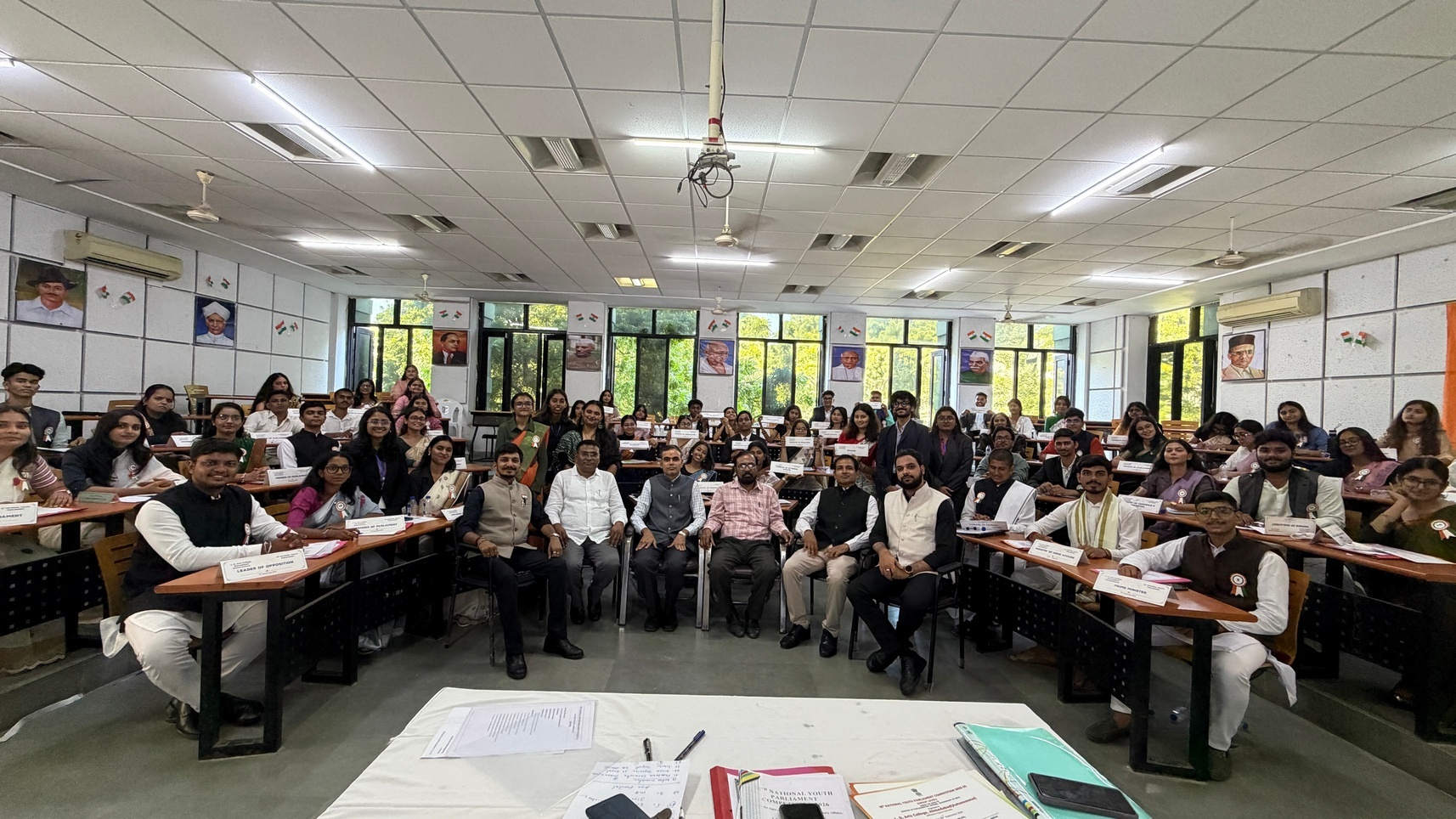
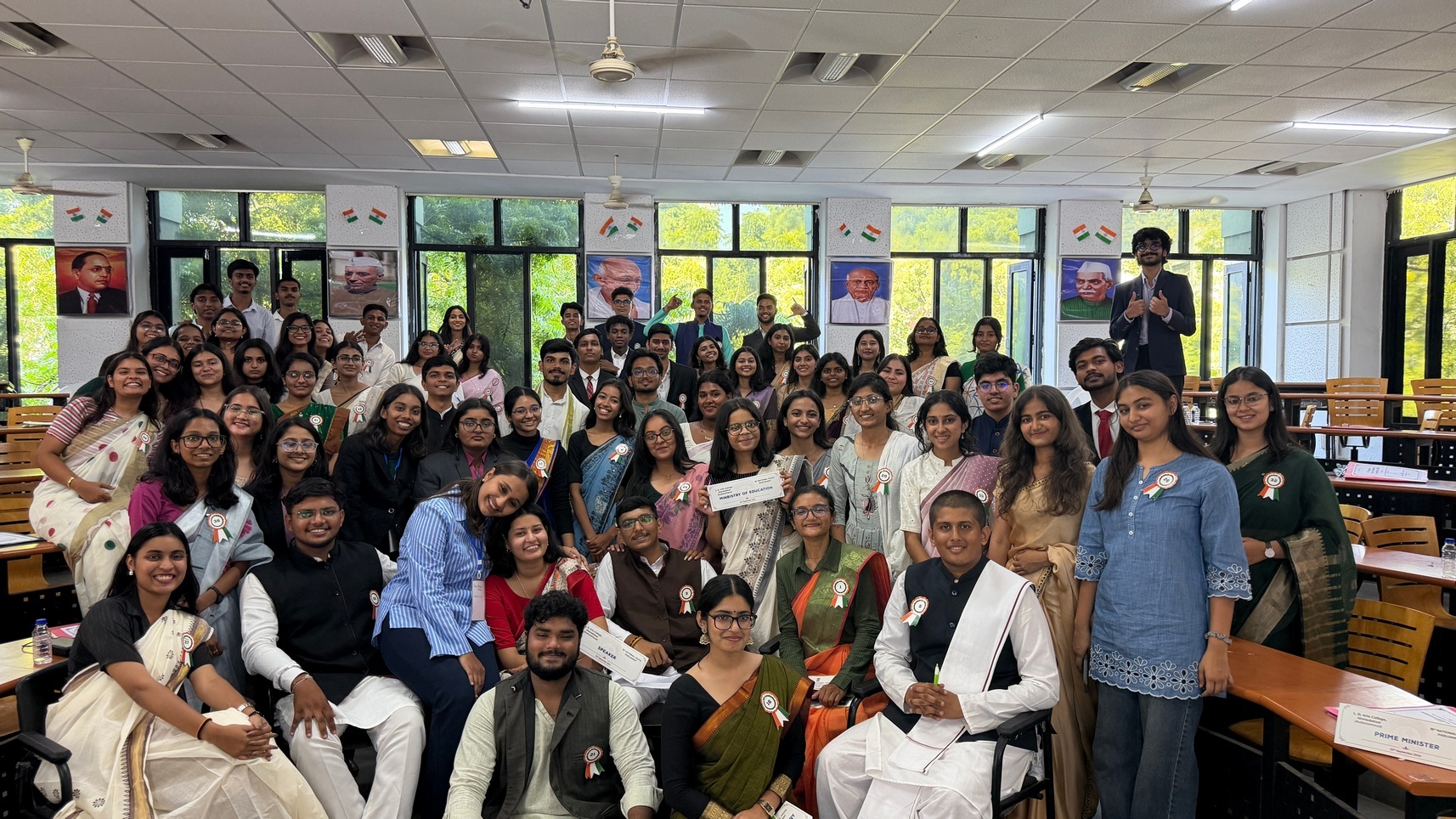
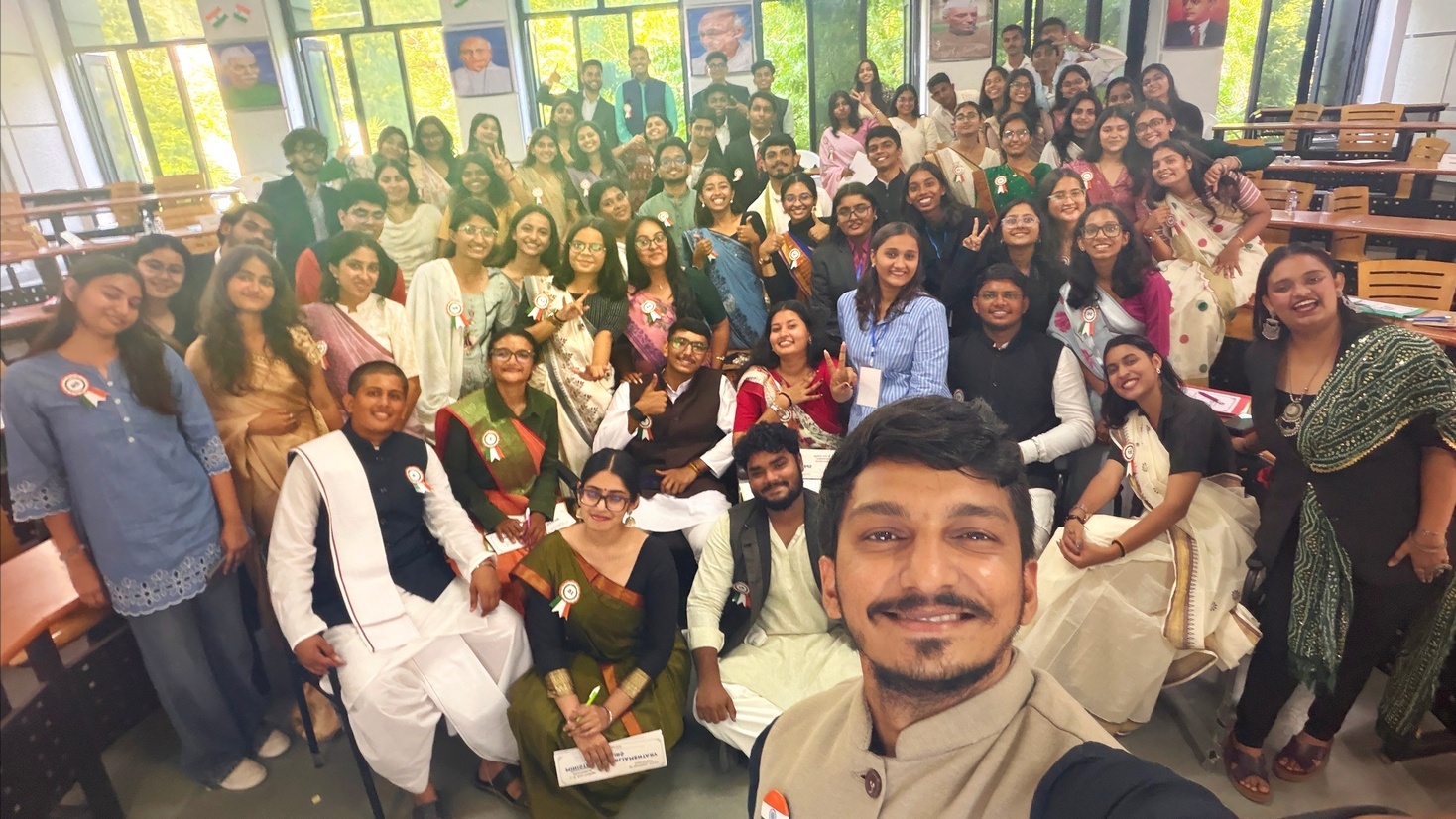
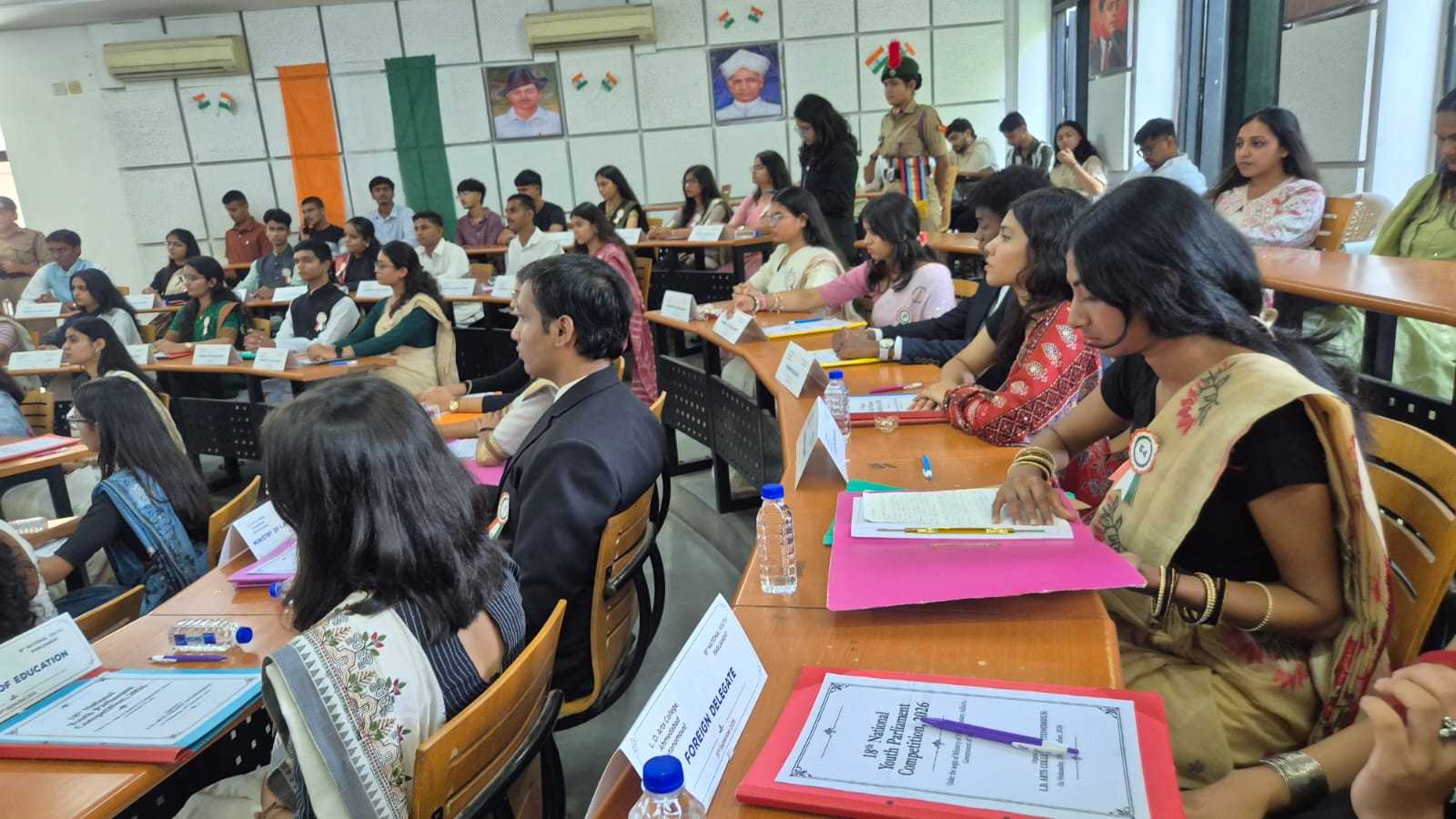
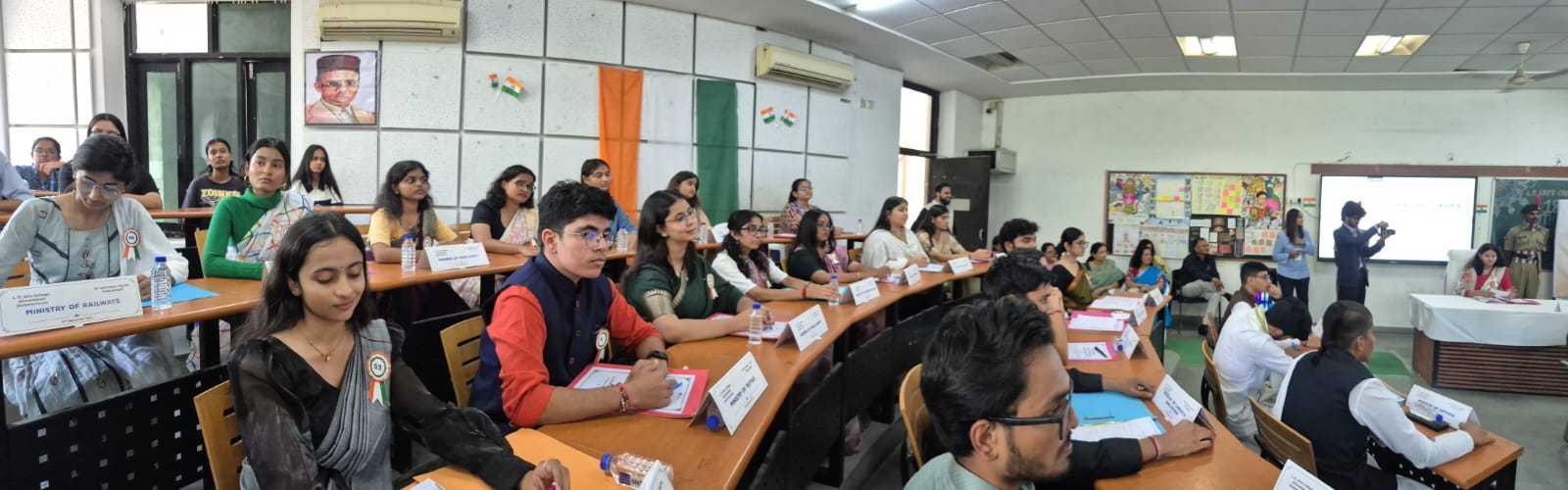
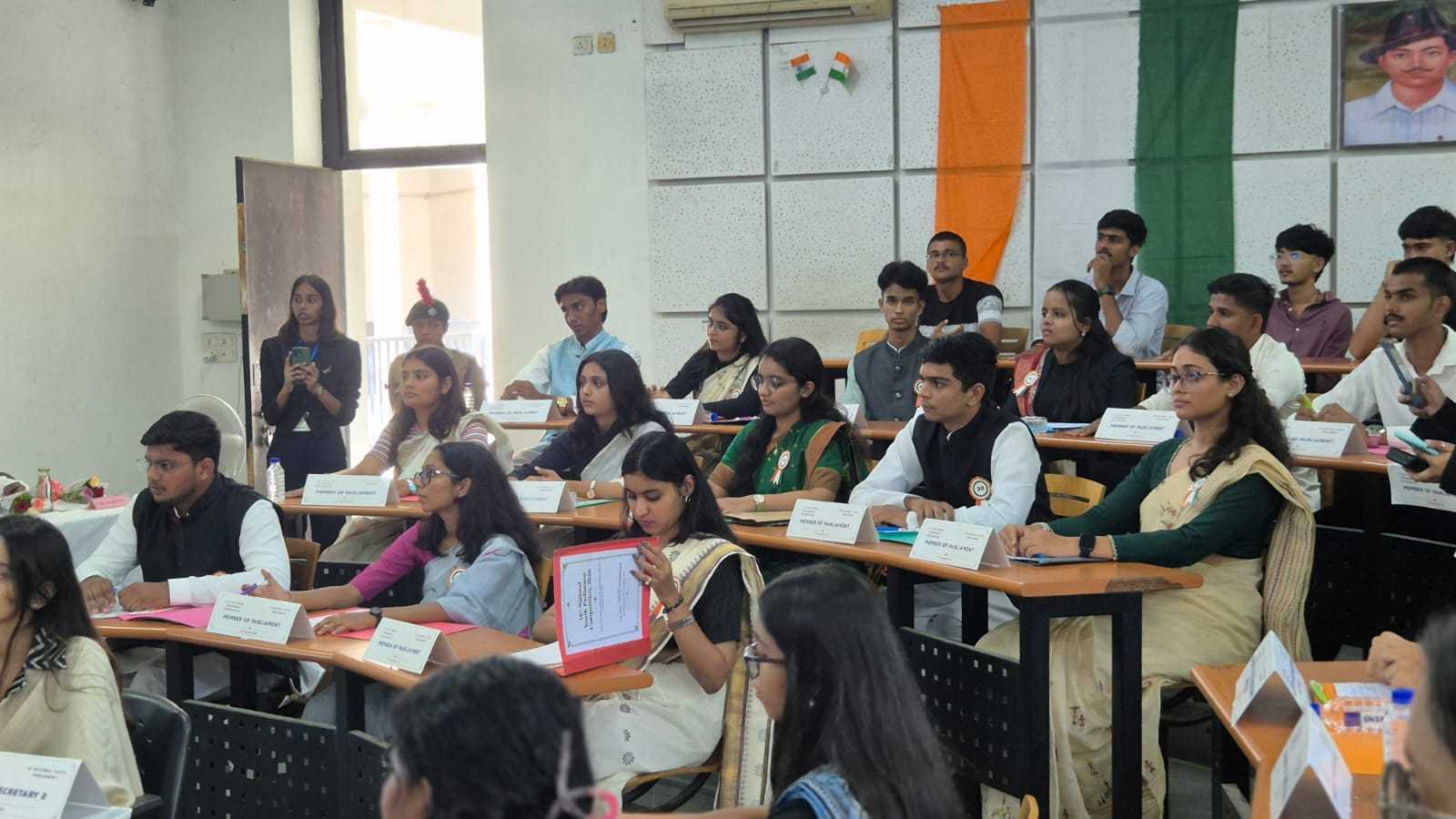
The Department of Political Science, L. D. Arts College, Ahmedabad (Autonomous) successfully organised the 18th National Youth Parliament Competition (Group Level) on 30 September 2026 under the aegis of the Ministry of Parliamentary Affairs, Government of India. The Youth Parliament was organised around the theme “Viksit Bharat 2047” and witnessed the participation of 55 students.
The programme aimed to provide students with practical and experiential exposure to the functioning of Parliament, parliamentary procedures, democratic deliberation, public policy and representative institutions. Students assumed various parliamentary and supporting roles, including the President, Speaker, Prime Minister, Ministers, ruling and opposition members, foreign delegates, Secretariat, media representatives and marshals.
Inaugural Session
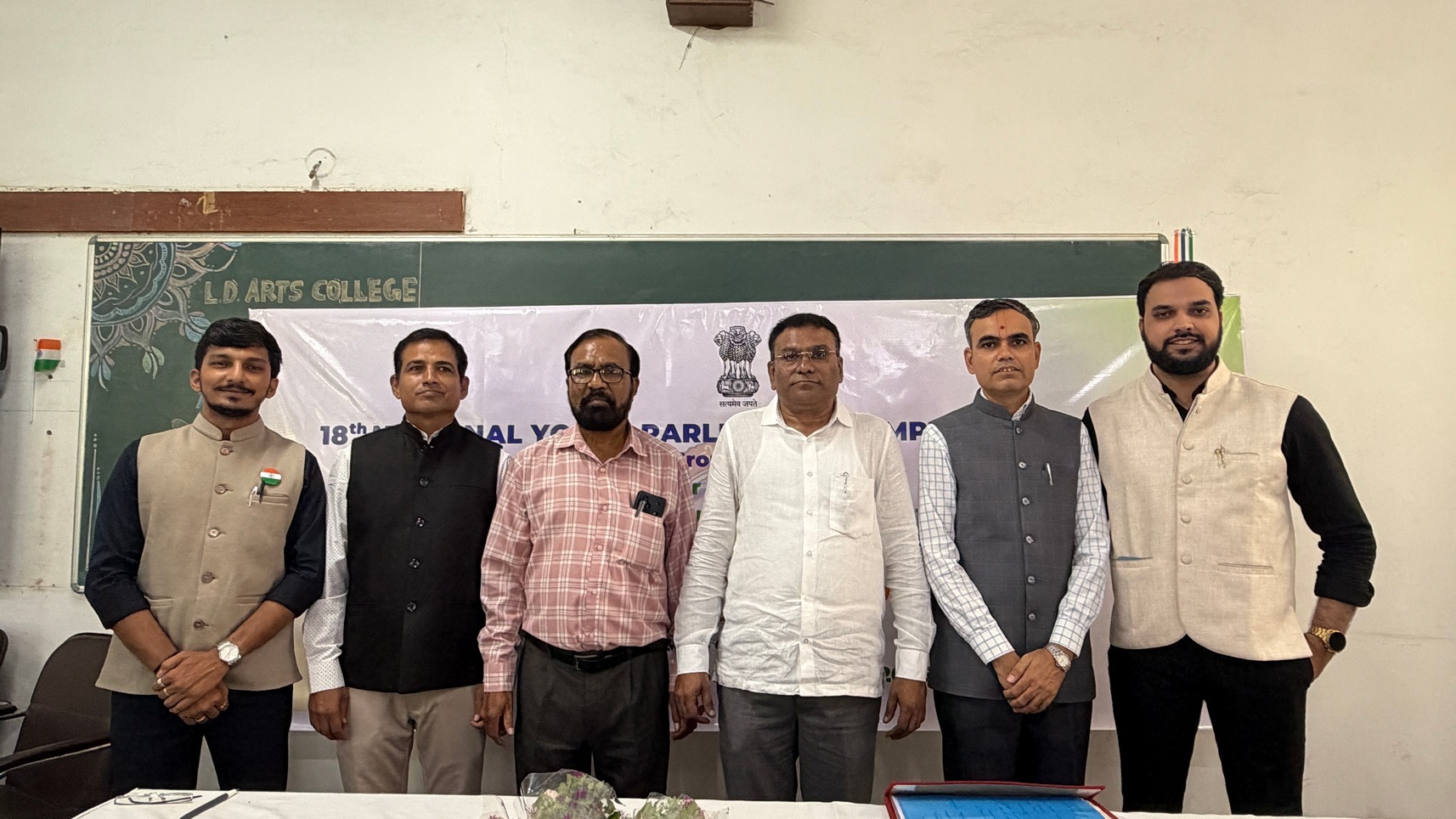
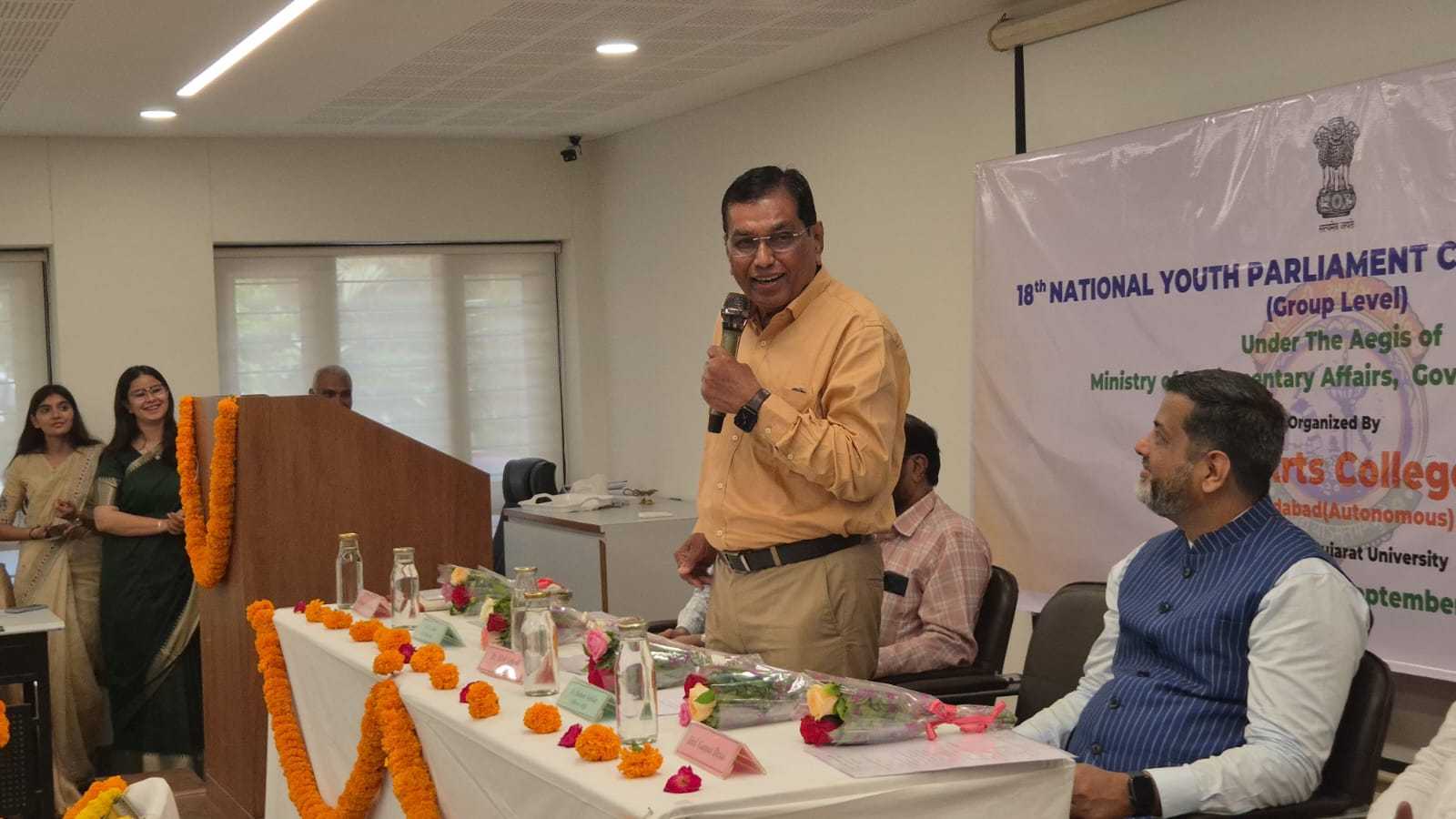
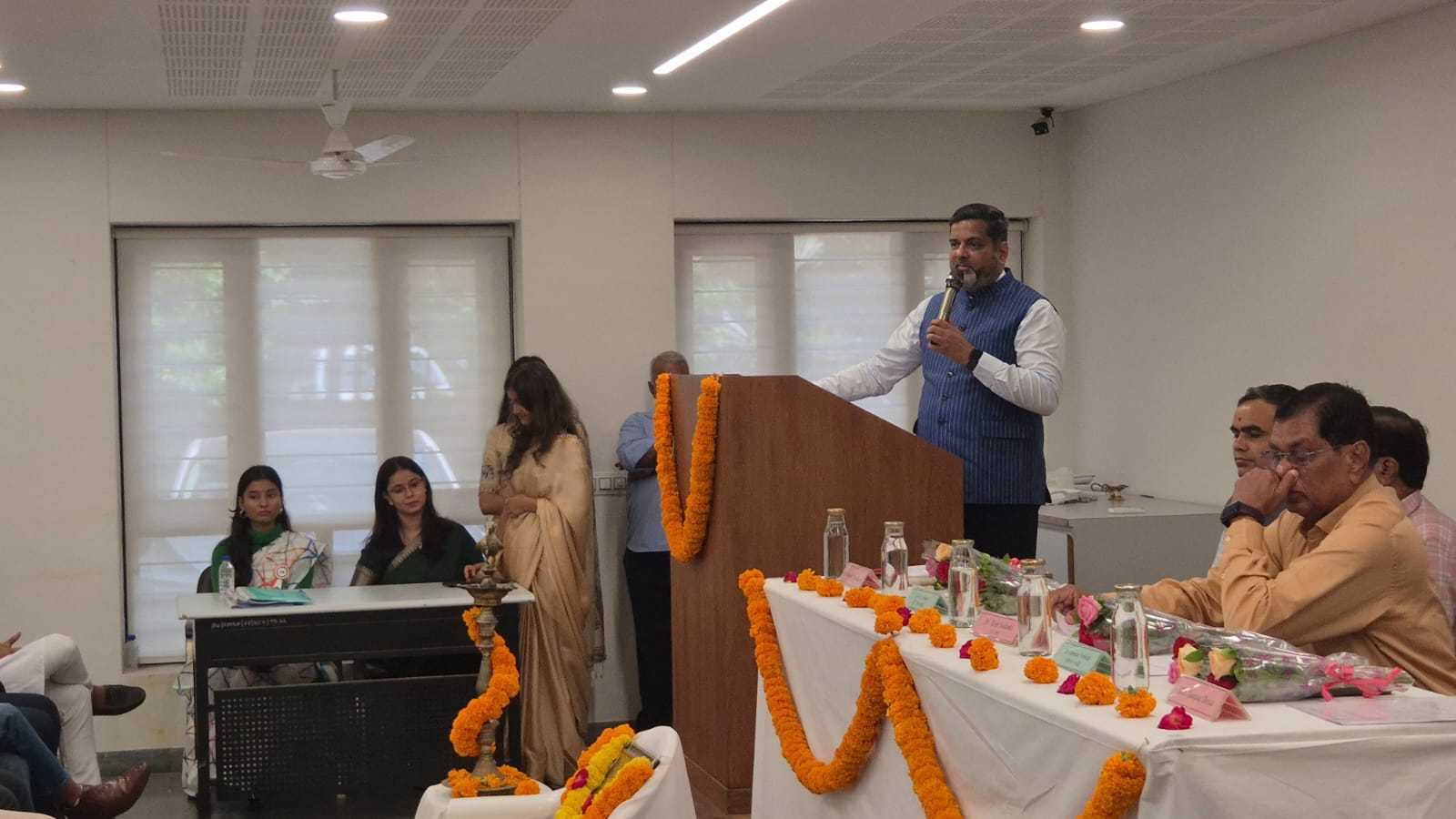
The programme commenced with an inaugural session at 10:30 a.m. The session began with a welcome speech by Dr. Kamlesh Dabhi, followed by a prayer, Deep Pragatya and the welcome address by Dr. Mahipatsinhji Chavda, Principal, L. D. Arts College.
The dignitaries were felicitated during the inaugural ceremony. The programme also featured addresses by Dr. Shriram Nirlekar, Director, Ahmedabad Education Society, and Dr. Kiritbhai Solanki, Former Member of Parliament, Ahmedabad West. The inaugural session concluded with a vote of thanks by Mr. Abhishek Tiwari, followed by the National Anthem.
Parliamentary Proceedings
The main Youth Parliament session commenced at 12:00 noon and followed a structured parliamentary sequence. The proceedings included the opening session, Question Hour, Zero Hour, introduction of foreign delegates, legislative business, bill readings, discussion, voting and closing proceedings.
During Question Hour, students raised questions on significant contemporary issues relating to education and student opportunities, agriculture and farmers, the West Asia crisis, flood relief, and law and justice. These questions were answered by students representing various ministerial portfolios, providing an opportunity for participants to understand the nature of parliamentary accountability and ministerial responses.
The Zero Hour focused on three important areas—border drones and drugs, examination integrity and youth employment, and defence procurement and audit. Students representing different constituencies raised issues, while the concerned ministers responded to the matters placed before the House.
Legislative Simulation: “The Viksit Bharat 2047” Bill
One of the major highlights of the Youth Parliament was the legislative simulation centred on “The Viksit Bharat 2047” Bill. The Bill went through the parliamentary stages of first reading, questions and discussion, second reading, suggestions, third reading and voting.
The discussions during the legislative process covered issues including cooperative federalism, state autonomy, AI-related reskilling and the Viksit Bharat Development Fund. Students actively participated in questioning, presenting suggestions and deliberating on the provisions of the proposed Bill before it was put to vote.
A student-led media interaction was also incorporated into the proceedings, in which student media representatives questioned participants holding parliamentary and ministerial portfolios. This provided an additional platform for students to demonstrate their understanding of public policy and contemporary issues.
Promoting Democratic Learning Among Youth
The Youth Parliament provided students with an opportunity to learn parliamentary practices through direct participation rather than classroom instruction alone. The exercise encouraged public speaking, critical thinking, policy discussion, leadership, teamwork and democratic dialogue.
The programme also enabled students to understand the roles of the government and opposition, the importance of questioning and accountability, the process of legislative deliberation and the significance of informed democratic participation.
The successful organisation of the event was made possible through the dedicated efforts of the Department of Political Science, faculty members, student participants and volunteers. Their coordination, discipline, teamwork and commitment contributed significantly to the smooth conduct of the programme.
The event concluded with the Speaker’s Address and National Anthem, followed by the Valedictory Session, during which certificates were distributed to the participants and closing remarks were delivered.
The 18th National Youth Parliament Competition 2025–26 at L. D. Arts College thus served as a meaningful platform for strengthening students’ understanding of parliamentary democracy, constitutional values, public policy and responsible citizenship, while giving them valuable practical experience of democratic deliberation.